Hydrogenation Plant Manufacturers
Global Turnkey Hydrogenation Plant Manufacturers – Engineered in India for Edible Oil, Vanaspati, Margarine & Shortening Production.

Global Turnkey Hydrogenation Plant Manufacturers – Engineered in India for Edible Oil, Vanaspati, Margarine & Shortening Production.
Hydrogenation is a process utilized to modify the physical characteristics of natural fats and oils . Employed in the edible oil processing industry for over a century, this technique commonly referred to as ‘hardening’ primarily targets liquid vegetable oils such as soybean, canola, or sunflower. The objective is to enhance their oxidative stability and refine their melting properties by decreasing their level of unsaturation.
In this hydrogenation plant the unsaturated oils convert unsaturated bonds to saturated by means of hydrogen molecules under presence of the catalyst and increase the melting point of oil or fats.
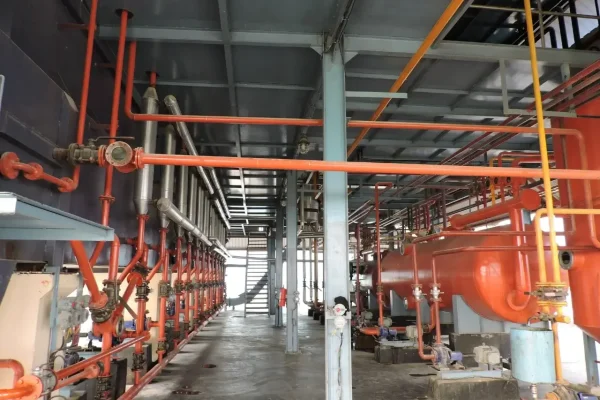

A fully hydrogenated oil plant processes edible oils to increase their stability, shelf life and change their physical properties, making them suitable for various food applications.
Oil Selection and Cleaning: Raw vegetable oils (such as soybean, palm, or canola oil) are selected based on the desired final product. The oil is cleaned to remove impurities such as free fatty acids, phospholipids, and pigments through processes like degumming, neutralization, and bleaching. Heating: The cleaned oil is heated to the required temperature, typically between 180°C and 220°C, to facilitate the hydrogenation reaction
Reaction Vessel: The heated oil is introduced into a hydrogenation reactor. This reactor is designed to withstand high pressure and temperature.
Hydrogen Addition: Hydrogen gas is added to the reactor under controlled conditions. The hydrogenation reaction involves the addition of hydrogen atoms to the double bonds of unsaturated fatty acids in the oil, converting them into saturated fatty acids.
Catalyst: A metal catalyst, usually nickel or a nickel-based compound, is used to speed up the reaction. The catalyst is often in the form of a fixed bed or a slurry.
Temperature and Pressure Control: The reaction conditions are carefully controlled. Typical operating temperatures range from 150°C to 220°C and pressures can vary from 1 to 20 atmospheres, depending on the desired level of hydrogenation.
Filtration/Centrifugation: After the hydrogenation reaction, the oil is separated from the spent catalyst. This is typically done through filtration or centrifugation.
Deodorization: The hydrogenated oil may be subjected to deodorization to remove any residual odors or flavors. This step usually involves steam distillation under vacuum.
Cooling: The hydrogenated oil is cooled to ambient temperature or to a specified temperature for storage. Storage: The oil is stored in tanks under controlled conditions to prevent oxidation and maintain quality.
In a partially hydrogenated oil plant, the goal is to partially hydrogenate vegetable oils to achieve desired properties, such as a specific melting point or consistency, while maintaining some level of unsaturation. This process is used to create fats that are more stable than fully unsaturated oils but not as solid as fully hydrogenated oils.
Oil Selection and Cleaning: Raw vegetable oils (such as soybean, palm, or canola oil) are selected based on the desired final product. The oil is cleaned to remove impurities such as free fatty acids, phospholipids, and pigments through processes like degumming, neutralization, and bleaching. Heating: The cleaned oil is heated to the required temperature, typically between 180°C and 220°C, to facilitate the hydrogenation reaction.
Reaction Vessel: The heated oil is introduced into a hydrogenation reactor. This reactor is designed to withstand high pressure and temperature. Hydrogen Addition: Hydrogen gas is added to the reactor under controlled conditions. The hydrogenation reaction involves the addition of hydrogen atoms to the double bonds of unsaturated fatty acids in the oil, converting them into saturated fatty acids. Catalyst: A metal catalyst, usually nickel or a nickel-based compound, is used to speed up the reaction. The catalyst is often in the form of a fixed bed or a slurry. Temperature and Pressure Control: The reaction conditions are carefully controlled. Typical operating temperatures range from 150°C to 220°C, and pressures can vary from 1 to 20 atmospheres, depending on the desired level of hydrogenation.
Filtration/Centrifugation: After the hydrogenation reaction, the oil is separated from the spent catalyst. This is typically done through filtration or centrifugation.
Deodorization: The hydrogenated oil may be subjected to deodorization to remove any residual odors or flavors. This step usually involves steam distillation under vacuum.
Cooling: The hydrogenated oil is cooled to ambient temperature or to a specified temperature for storage. Storage: The oil is stored in tanks under controlled conditions to prevent oxidation and maintain quality.

Trusted worldwide, Muez Hest provides end-to-end turnkey solutions delivering fully operational plants from design to delivery.


















March 15, 2025
October 20, 2024
At Muez Hest, we are proud to be one of the leading global hydrogenation plant manufacturers headquartered in India, offering advanced hydrogenation plant solutions specifically engineered for the edible oil, vegetable oil, margarine, vanaspati, shortening and bakery fat industries. Our hydrogenation systems are designed to deliver safe, reliable and energy-efficient performance - helping food and edible-fat manufacturers improve product quality, melt profile, oxidative stability and shelf life across international markets.
Edible oil hydrogenation is a critical fat modification process that converts unsaturated vegetable oils into more stable, value-added solid and semi-solid fats. With our deep expertise in fat modification technology, we offer a fully customized hydrogenation plant setup that meets international FSSAI, FDA, EU and Codex Alimentarius standards while supporting smooth, continuous production at industrial scale.
Whether you require a complete turnkey hydrogenation plant, high-pressure reactors, nickel-catalyst filtration systems, deodorization or specialized post-treatment equipment, Muez Hest provides end-to-end international engineering services - from process design and basic engineering packages to mechanical fabrication, installation, commissioning and long-term operator training.
Backed by 30+ years of global experience and advanced fat modification technology, we help edible-oil refineries and bakery/margarine producers build efficient hydrogenation plants in India and across 30+ countries - ensuring maximum productivity, optimum hydrogen utilization, and consistent product output. Our team ensures each project is tailored to client feedstock, target melting profile and capacity requirements while maintaining strict safety, regulatory and trans-fat compliance for long-term performance.
The hydrogenation plant process is a chemical fat-modification method where hydrogen gas is added to vegetable oils and edible fats under controlled temperature, pressure and catalyst conditions to saturate unsaturated double bonds. This process is foundational to the edible oil, margarine, vanaspati, shortening and confectionery fat industries - improving product stability, shelf life, texture and melt-profile performance.
As one of the trusted global companies offering advanced hydrogenation plant solutions in India and internationally, Muez Hest plays a major role in designing and supplying high-quality edible oil hydrogenation systems. Our plants are engineered to handle moderate-to-high pressure operation, maintain consistent temperature control across reactor stages, and deliver safe, efficient, and reliable plant performance - at any scale from pilot to industrial.
The hydrogenation plant process is critical for edible-oil manufacturers because it helps:
• Convert liquid vegetable oils into solid/semi-solid fats with engineered melting profiles
• Achieve the required hardness, viscosity and slip melting point for margarine, vanaspati and bakery fats
• Improve oxidative stability and extend shelf life of finished fats
• Create high-quality, value-added fats for confectionery and food-service applications
• Maintain uniform quality and performance across production lots
• Enhance the overall efficiency and economics of edible-oil refinery operations
The accuracy, safety and consistency of the hydrogenation process directly impact the final output quality and regulatory compliance - particularly for trans-fat limits under FSSAI and global guidelines. That is why edible-oil businesses worldwide rely on Muez Hest for modern, internationally-certified hydrogenation plant setups.
At Muez Hest, a trusted global name in advanced hydrogenation plant solutions, we design each system to ensure maximum efficiency, safety and consistent output across edible-oil applications. The hydrogenation plant process begins with the selection and pretreatment of high-quality vegetable oils - soybean, palm, canola, sunflower, cottonseed, rapeseed - followed by precise hydrogen addition under controlled reactor conditions.
Using modern dead-end or loop reactors, precision temperature control, and accurate hydrogen and catalyst feeding systems, the hydrogenation plant process converts unsaturated triglycerides into engineered fats with controlled melt curves and superior oxidative stability. Every stage - from feed preparation and hydrogen addition to catalyst filtration, deodorization, cooling and packaging - is carefully monitored to maintain food-grade purity and uniform quality.
Our fully engineered turnkey hydrogenation plant setups include advanced safety systems, automated PLC-based controls, and energy-efficient operations that reduce waste and improve productivity. The purification and post-treatment steps ensure that the final hydrogenated products meet domestic and international quality standards for trans-fat content, peroxide value, free fatty acids and heavy metals.
As a leading global provider of hydrogenation plant solutions, Muez Hest focuses on sustainable design, low energy consumption, hydrogen recovery, and long-term operational reliability. Our state-of-the-art hydrogenation systems help edible-oil and margarine industries achieve consistent results while supporting the growing demand for high-quality, regulation-compliant fats.
As a leading global provider of advanced hydrogenation plant solutions, Muez Hest delivers complete turnkey systems engineered for reliable and efficient edible-oil hydrogenation operations across India and international markets.
We provide end-to-end international support for setting up a hydrogenation plant - including feasibility studies, process design, equipment manufacturing, installation, commissioning, and operator training.
With clients across 30+ countries and three decades of plant deliveries from our Mumbai headquarters, we understand international quality norms, safety regulations and regional industry needs.
Our plants use advanced reactors, precise temperature and pressure control, and energy-efficient technology to ensure maximum hydrogen utilization and consistent quality during every step of the hydrogenation plant process.
Whether your industry focuses on margarine, vanaspati, shortening, bakery fats or specialty confectionery fats, we tailor the hydrogenation plant process to match your required specifications, capacity and target melt profile.
Our engineering prioritizes hydrogen recovery, low emissions, and safe handling during high-pressure operation. We design plants that align with global ESG benchmarks for the edible-oil sector.
1. Consultation & Requirement Analysis - We begin by understanding your production goals, feedstock type, target melting profile, capacity needs, safety norms and budget.
2. Design & Engineering - Our engineering team prepares detailed layouts, P&IDs and process flow diagrams optimized for heat transfer, pressure control and hydrogen efficiency.
3. Sourcing & Manufacturing - Reactors, heat exchangers, filters and control systems are built in-house or sourced from trusted global suppliers, every component tested for high-pressure performance.
4. Installation & Commissioning - Our experienced engineers handle complete on-site installation, testing and commissioning in any geography.
5. Training & After-Sales Support - Hands-on operator training, technical assistance and scheduled maintenance support keep your hydrogenation plant process running safely and efficiently for the long term.
Partner with Muez Hest India Pvt.Ltd, a leading provider of advanced hydrogenation plant solutions in India and across the world and experience world-class turnkey support for setting up safe, efficient and high-performance edible-oil hydrogenation facilities. With our proven hydrogenation plant process, edible-oil industries can achieve improved product stability, better melting properties and superior performance across applications such as margarine, vanaspati, shortening, bakery fats and specialty confectionery fats. Every plant is engineered for safety, energy efficiency, regulatory compliance and long-term durability.
Contact us today to set up a high-efficiency hydrogenation plant that boosts your production capacity and supports sustainable, long-term business growth in the global edible-fat market.
Discover some of the most asked questions regarding Hydrogenation Plant.
Fully Hydrogenated Oils: All double bonds in the fatty acids are converted to single bonds, resulting in a completely saturated fat. This type of oil is solid at room temperature and has a longer shelf life.
Partially Hydrogenated Oils: Only some of the double bonds are converted to single bonds, leaving some unsaturated bonds intact. This process can result in the formation of trans fats, which have been associated with health risks.
Hydrogenation helps achieve the desired texture and consistency in oils, which is important for various food applications.
Labeling Requirements: Many countries require labeling of trans fat content in foods. Some have implemented bans or restrictions on trans fats in food products.
Quality Standards: Regulations often define quality standards for edible oils, including those that have undergone hydrogenation.
Fully hydrogenated oils are completely saturated, which means they do not contain trans fats. However, excessive consumption of saturated fats can still have health implications, such as contributing to heart disease.